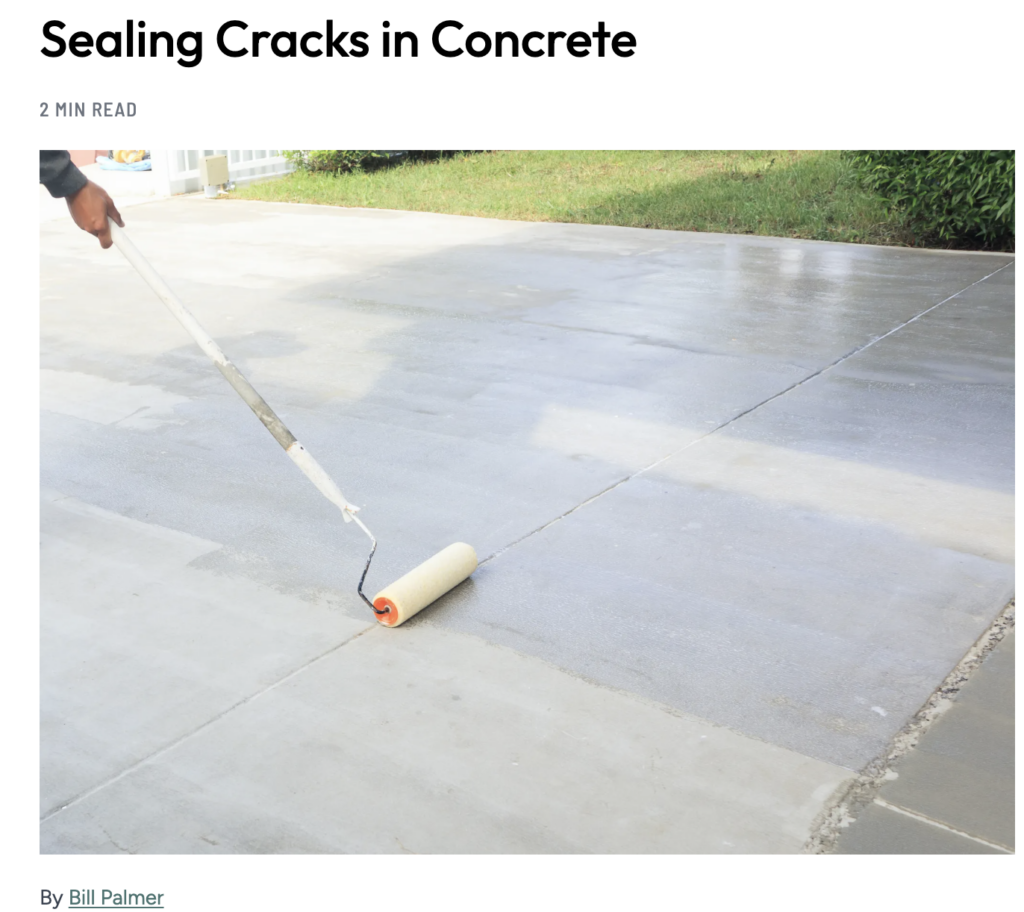
Q. What is the best way to seal hairline cracks in a concrete driveway? The products I’ve found at home centers seem too thick, and my client is concerned that the cracks will get worse during the winter months.?
A. Bill Palmer, former editor of Concrete Construction magazine and president of Complete Construction Consultants in Lyons, Colo., responds: Cracks seldom degrade from freeze-thaw action, since water within them isn’t confined and therefore can’t cause damage when it freezes. In addition, most “hairline” cracks are surface cracks; they don’t go all the way through the slab, so water can’t get through and degrade the subbase. For cracks less than .04 inch wide (about the thickness of a standard paper clip wire), the aggregate interlock will prevent any differential movement across them, and repair is unnecessary. So if these truly are hairline cracks, the best approach is probably to do nothing: Whatever crack-repair technique you use will look worse than the crack.
Even a crack wide enough to allow water all the way through the slab shouldn’t cause any damage if there’s a well-compacted and well-drained subbase; without that, uneven settlement could occur around the crack. But keep in mind that cracks this size are active — they widen in cold weather and narrow in warm weather — so any sealant must have enough elasticity to handle the movement.
If you do decide to seal the cracks, the best solution for the narrow ones you describe is to seal the entire slab. Make sure the surface is very clean, then apply a good solvent-based acrylic sealer with a pump sprayer. Don’t put it on too thickly, though — it’s best to apply it in two thinner coats — and don’t apply it if the temperature is less than 50°F or greater than 90°F.
For a broom-finish surface texture, work the sealer into the surface with a roller. (Sealers come in both glossy and matte finishes.) Add some grit — a product such as H&C’s SharkGrip (www.hcconcrete.com) should work — to the mix if the surface seems too slippery. https://www.jlconline.com/how-to/foundations/fixing-cracks-in-concrete_o?
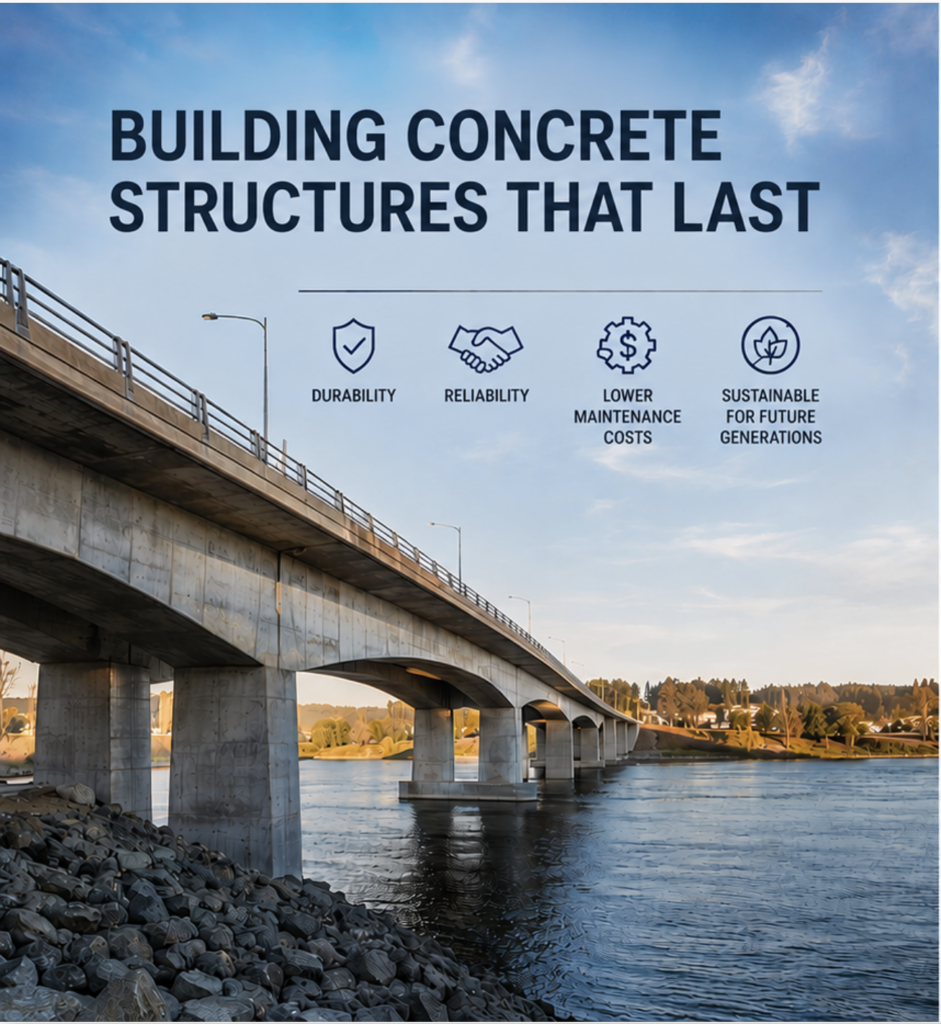
Building Concrete Structures To Last
For decades, concrete has been the foundation of roads, bridges, commercial buildings, parking structures, and industrial facilities. Yet many concrete structures require costly repairs far sooner than owners anticipated. Cracking, corrosion, water intrusion, and environmental exposure can significantly reduce service life and increase maintenance expenses.
The future of concrete construction is not simply about building stronger structures—it’s about building smarter, longer-lasting infrastructure that stands the test of time. Advances in materials, mix designs, and construction technologies are making it possible to create infrastructure that can withstand harsh conditions and serve communities for generations.
Why Durability Matters More Than Ever
Infrastructure owners face growing pressure to maximize the value of every construction dollar. Repairing bridges, parking garages, wastewater facilities, and commercial structures can cost millions over the life of an asset. In many cases, the true cost of a structure is not its initial construction, but the ongoing maintenance and repairs required to keep it operational.
By investing in durability upfront, owners can:
- Reduce lifecycle costs
- Minimize disruptions caused by repairs
- Extend asset service life
- Improve safety and reliability
- Enhance sustainability by reducing material consumption and reconstruction
As a result, durability has become a key consideration during project planning and material selection.
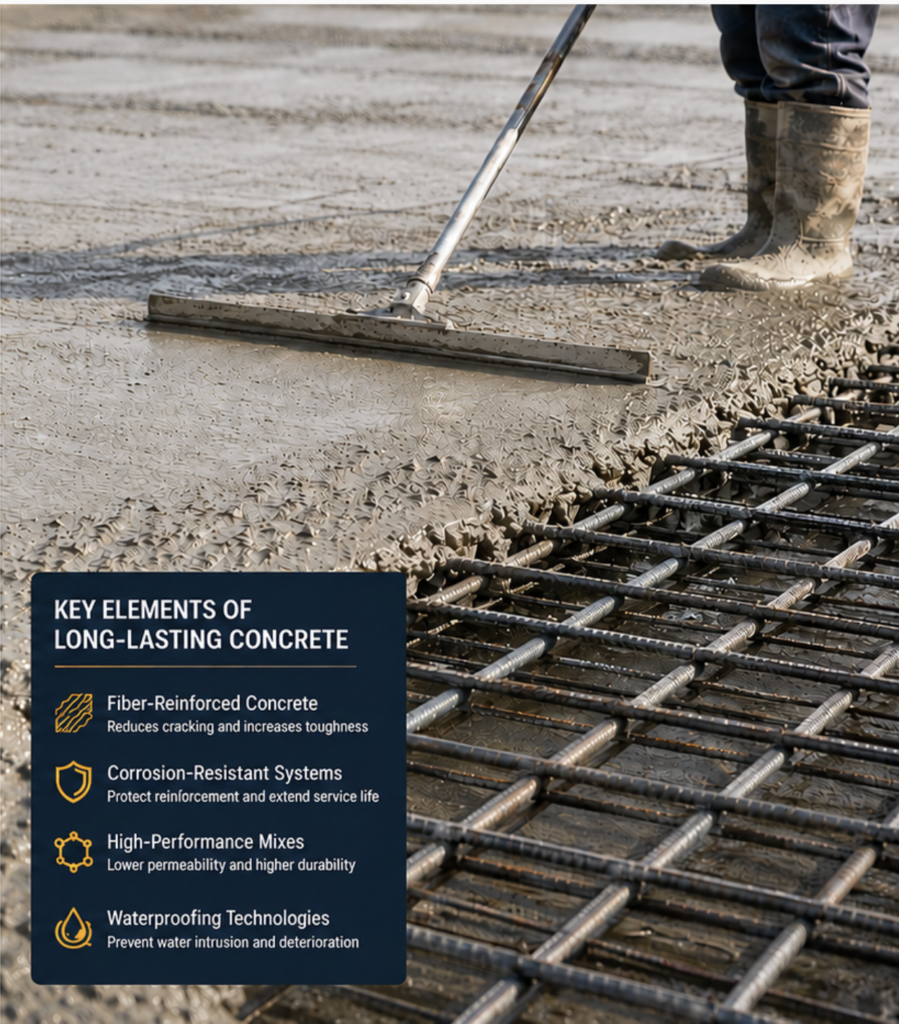
Fiber-Reinforced Concrete Improves Long-Term Performance
One of the most significant advancements in concrete technology is the widespread adoption of fiber-reinforced concrete (FRC).
By incorporating steel, synthetic, glass, or basalt fibers into the concrete mix, contractors can improve crack resistance and overall structural performance. These fibers help distribute stresses throughout the concrete, reducing the formation and propagation of cracks that can allow moisture and chemicals to penetrate the structure.
Benefits of fiber-reinforced concrete include:
- Reduced shrinkage cracking
- Improved impact resistance
- Enhanced durability in harsh environments
- Greater fatigue resistance
- Longer service life for slabs, pavements, and structures
As labor shortages continue to challenge the industry, many contractors also appreciate the potential to reduce traditional reinforcement requirements in certain applications.
Fighting Corrosion Before It Starts
Corrosion remains one of the leading causes of concrete deterioration worldwide. When water, chlorides, and oxygen reach embedded steel reinforcement, corrosion begins. As the steel expands, it creates internal pressure that leads to cracking, spalling, and structural damage.
Modern corrosion-resistant systems are helping owners protect their investments for decades.
Popular solutions include:
Epoxy-Coated Reinforcement
A protective coating helps prevent corrosive elements from reaching the steel surface.
Stainless Steel Reinforcement
Although more expensive initially, stainless steel offers exceptional resistance to corrosion and can dramatically extend service life.
Corrosion Inhibitors
Chemical admixtures can be added directly to concrete mixes to reduce the likelihood of reinforcement corrosion.
Non-Metallic Reinforcement
Glass fiber-reinforced polymer (GFRP) and other composite reinforcement materials eliminate the risk of rust entirely.
These technologies are becoming increasingly common in bridges, marine structures, parking facilities, and other environments exposed to moisture and deicing chemicals.
High-Performance Concrete Raises the Bar
Traditional concrete mixes are being replaced in many applications by high-performance concrete (HPC), designed specifically to deliver superior durability and strength.
High-performance concrete typically features:
- Lower permeability
- Higher compressive strength
- Improved freeze-thaw resistance
- Better chemical resistance
- Reduced cracking potential
By limiting the movement of water and harmful chemicals through the concrete matrix, HPC significantly reduces deterioration mechanisms that shorten service life.
Supplementary cementitious materials such as fly ash, slag cement, and silica fume are often incorporated to improve durability while also supporting sustainability initiatives.
For critical infrastructure projects, high-performance concrete is increasingly viewed as a necessity rather than a luxury.
Waterproofing: The First Line of Defense
Water is often the primary driver behind concrete deterioration. Whether it carries chlorides, sulfates, or simply contributes to freeze-thaw damage, moisture can dramatically reduce the lifespan of a structure.
Modern waterproofing technologies help prevent water intrusion before damage begins.
Effective solutions include:
Integral Waterproofing Admixtures
These products are blended directly into the concrete mix, creating a more water-resistant structure throughout the entire slab or wall.
Surface Sealers
Penetrating sealers can reduce water absorption while maintaining the appearance of the concrete.
Waterproof Membranes
Applied systems create a barrier that protects foundations, parking decks, and below-grade structures from moisture infiltration.
Joint Protection Systems
Properly designed and maintained joints prevent water from entering vulnerable areas where deterioration often begins.
Contractors who prioritize waterproofing during construction can help owners avoid significant maintenance costs in the future.
Building for the Next Century
Concrete has always been known for its strength. Today, the focus is shifting toward longevity. By leveraging modern materials and construction practices, contractors can help owners build structures that resist deterioration, minimize maintenance, and last.
Visit our LinkedIn page post to make any comments you wish on this article:
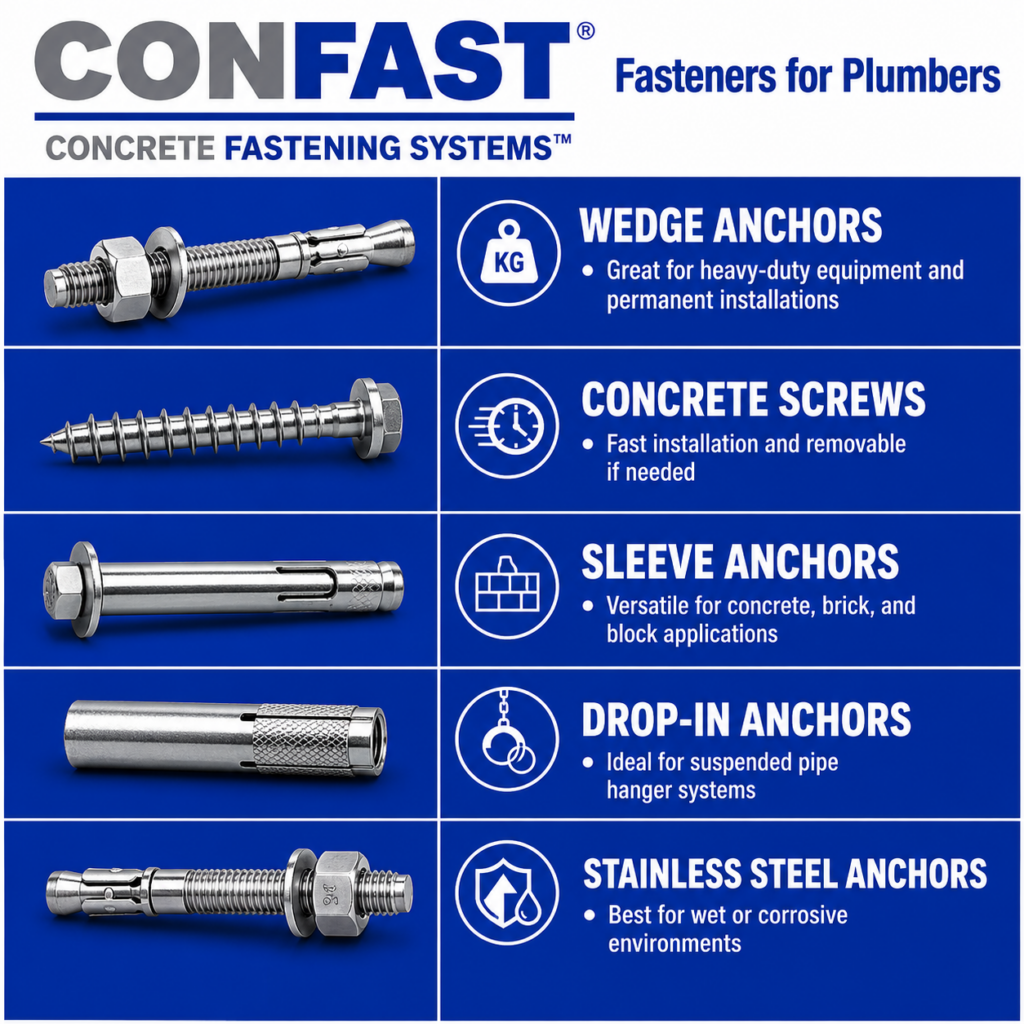
Plumbing installations depend on secure, long-lasting anchoring — especially in concrete basements, mechanical rooms, and commercial buildings. Choosing the right concrete fastener helps reduce vibration, movement, and future maintenance issues in wet or humid environments.
From pipe hangers and strut channels to water heater anchoring and equipment installation, CONFAST offers dependable fastening solutions built for the jobsite.
Explore wedge anchors, concrete screws, sleeve anchors, drop-in anchors, and stainless-steel options designed for reliable performance in concrete, block, and brick applications. Order online 24/7 at confast.com.